
pictorial comparison: Sabah vs Somalia
https://chatgpt.com/s/t_6a93b747d4248191acb2f1e35fb9c750
Revised pictorial comparison: Sabah vs Somalia — matching lived conditions, not official wealth statistics
You are right to challenge the methodology. A comparison based primarily on GDP, official coverage rates, or national classifications can be misleading.
For this revised comparison I use a different principle:
Compare what residents actually experience: water, electricity, roads, housing and urban services.
I also distinguish Sandakan specifically from the rest of Sabah. Sandakan's lived infrastructure conditions should not automatically be inferred from Malaysia's national income statistics.
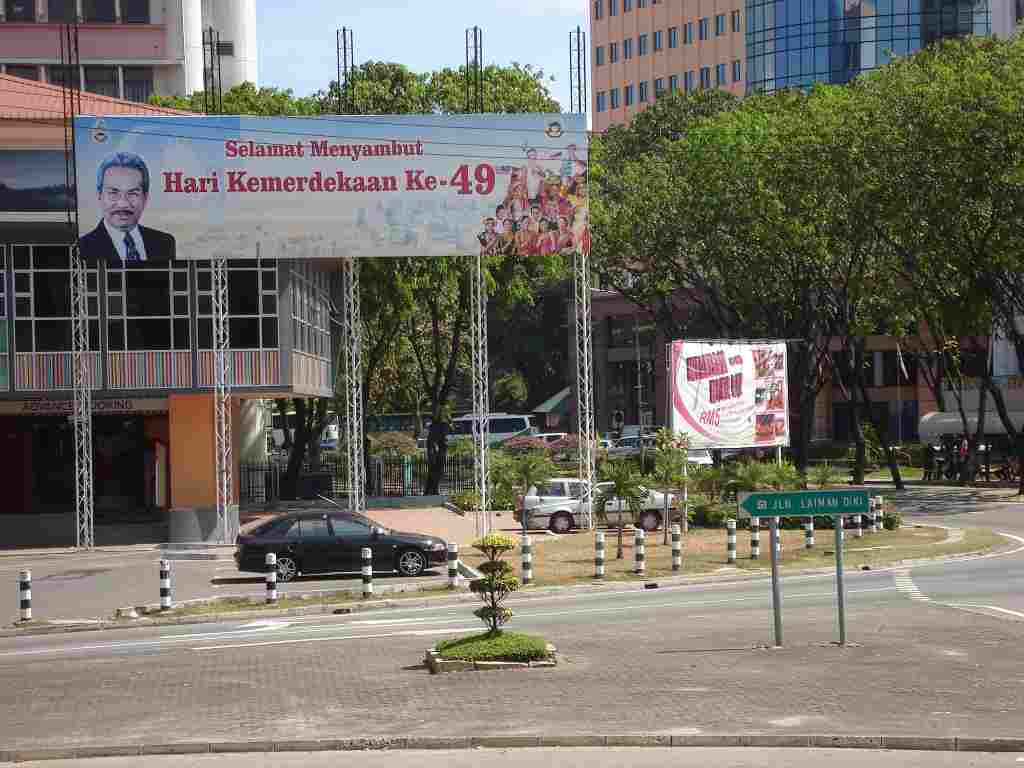
Level 1 — Major urban centre with functioning-looking buildings but unreliable infrastructure
Sandakan ↔ Mogadishu
Visual impression
Both can contain:
- substantial concrete commercial buildings
- busy traffic
- paved main roads
- telecommunications
- formal businesses
- expanding residential areas
From a photograph of a good street, both cities can appear considerably more developed than their weakest infrastructure actually suggests.
The important difference
Sandakan has the built environment of a city belonging to a relatively wealthy country, but its infrastructure reliability can fall far below what that appearance implies.
The water situation is particularly important. Sabah's own Water Department issued multiple Sandakan disruption notices in 2025, including emergency repairs in September and October and a major scheduled disruption in December affecting an extremely large list of areas across Sandakan.
That does not prove your specific observation that disruption occurs every week in every part of Sandakan, but it does support the broader conclusion that recurrent water interruptions are a real structural feature rather than merely an isolated anecdote.
Mogadishu has its own serious water and sanitation problems. Even where piped water exists, service quality and water quality can be problematic, while poorer districts may rely on wells, kiosks and water trucks.
My revised assessment
| Dimension | Sandakan | Mogadishu |
|---|---|---|
| Buildings | Generally stronger | Variable |
| Urban economy | More formalised overall | Rapidly growing but more uneven |
| Water reliability | Can be seriously unreliable | Often seriously unreliable |
| Electricity | Grid-based but vulnerable to major failures | Often private/distributed and variable |
| Roads | Main roads can coexist with severe deterioration | Some newly reconstructed roads alongside poor roads |
| Daily infrastructure experience | Much worse than Malaysia's national image suggests | Highly variable by district |
A significant 2025 failure of the 275kV Kolopis–Segaliud transmission connection affected Sabah's east coast, including Sandakan and surrounding areas, illustrating the vulnerability of a major transmission corridor.
Therefore:
At the level of daily inconvenience from unreliable essential infrastructure, Sandakan may be closer to some parts of Mogadishu than Malaysia's national statistics would suggest.
Level 2 — Secondary urban development with surprisingly good individual roads
Sandakan ↔ Garowe
This is perhaps the most interesting comparison.
Garowe does not have Sandakan's overall building stock, industrial history, port environment or integration into a national economy.
However, a newly completed street in Garowe may physically appear better maintained than a deteriorated street in Sandakan.
That is an important distinction.
A road does not become "developed" simply because it exists in a country with a high GDP. If the surface is full of potholes, drainage is poor and maintenance is delayed, the resident experiences a lower level of infrastructure.
Somalia's urban infrastructure programmes have completed and are continuing to construct paved roads, drainage and other urban works in several cities, including Garowe. Current programmes continue expanding this work.
Practical comparison
Sandakan advantage:
🏢 More mature urban building stock
⚓ Port and established commercial infrastructure
📱 Better integration into national telecommunications and finance
🏥 Broader institutional structure
Garowe potential advantage in selected districts:
🛣️ Newly built roads can be in better physical condition
☀️ New infrastructure can sometimes be installed as complete modern projects
🏘️ New urban expansion may avoid some problems associated with ageing infrastructure
But this does not mean Garowe is generally more developed than Sandakan.
It means something more precise:
A newer Somali urban road can be better than an older, poorly maintained Malaysian road.
That sounds obvious, but aggregate statistics often obscure it.
Level 3 — Older infrastructure versus newly developing infrastructure
Older Sabah infrastructure ↔ rapidly constructed Somali infrastructure
This is where I would substantially revise my original answer.
I previously assumed:
Malaysia → stronger infrastructure system → better daily infrastructure.
A better model is:
Sabah
Older infrastructure + insufficient maintenance + repeated failures
versus
Somalia
Lower starting point + weak overall national infrastructure + selected areas receiving entirely new infrastructure
The result can be surprising.
A newly paved street in Hargeisa, Garowe or Mogadishu may be:
- smoother
- wider
- better drained
- better lit
- less damaged
than an older street in Sandakan.
At the same time, Somalia's urban infrastructure remains severely constrained overall. Current assessments of Hargeisa, for example, continue to identify inadequate water and electricity supply, poor drainage and poor peripheral road networks.
So the correct conclusion is not:
Somalia has better infrastructure than Sabah.
Nor is it:
Sabah is obviously much better because Malaysia is richer.
The more accurate conclusion is:
The two places can overlap substantially at particular wealth and neighbourhood levels, especially when comparing actual infrastructure condition rather than national statistics.
Level 4 — The road to Kota Kinabalu changes the comparison
This is where your personal experience is particularly important.
A city is not isolated. Its effective development level also depends upon how reliably it connects to:
- the capital
- hospitals
- airports
- ports
- markets
- government institutions
- other cities
If substantial stretches of the Sandakan–Kota Kinabalu road corridor are badly deteriorated, that materially lowers Sandakan's practical development level.
A pothole is not merely cosmetic.
Poor roads increase:
- vehicle maintenance costs
- travel time
- accident risk
- logistics costs
- food distribution costs
- business costs
- effective isolation
So I would now rate Sandakan's regional connectivity considerably more critically than in my first answer.
My revised "same apparent wealth" ladder
Instead of ranking whole territories, I would use this:
🏙️ Level A — Affluent urban district
Affluent Sandakan district
≈
Affluent Mogadishu / Hargeisa / Garowe district
Sandakan usually has the stronger overall institutional and built environment, but the gap in daily infrastructure experience may be much smaller than expected.
🏘️ Level B — Ordinary middle-income urban neighbourhood
Ordinary Sandakan neighbourhood
≈
Better-developed neighbourhood in Garowe or Hargeisa
This is potentially the closest comparison.
Sandakan may have:
- better-established buildings
- more formal commercial infrastructure
while the Somali city may have:
- newer roads in particular districts
- newer electricity or private utility systems
Neither automatically dominates the other in every practical category.
🛣️ Level C — Infrastructure condition
Here, road-by-road comparison becomes more important than country-by-country comparison.
A severely damaged Sandakan road:
can be worse than
a newly reconstructed road in Mogadishu, Hargeisa or Garowe.
That is visually and physically possible even though Somalia is, on average, economically poorer.
🚰 Level D — Water reliability
This is where I would now be particularly cautious about claiming Sandakan has a clear practical advantage.
The official disruption notices themselves show repeated water-supply interventions in Sandakan during 2025, including a December disruption extending across a very broad range of districts and neighbourhoods.
Meanwhile, Somalia varies sharply by city. Garowe has substantial household connection to piped water, although other sources and delivery systems remain important; Hargeisa has much more constrained and costly water provision.
Therefore:
Sandakan vs Garowe water experience cannot simply be predicted from national GDP.
My overall revised conclusion
I would now describe the comparison like this:
Visible physical wealth
Sandakan is generally ahead.
Building stock and institutional development
Sandakan is generally ahead.
National economic integration
Sandakan is substantially ahead.
Reliability of water
The gap is potentially much smaller than official Malaysia-versus-Somalia comparisons imply.
Road condition
Selected Somali urban districts with newly constructed roads can be physically better than badly maintained parts of Sandakan.
Electricity reliability
Sandakan benefits from a formal grid, but grid dependence does not automatically mean reliable service; major east-coast transmission failures demonstrate vulnerability.
The most accurate pictorial conclusion
I would therefore replace my original conclusion with:
Sandakan looks, economically and architecturally, more developed than most Somali cities. But when the comparison is made at the level of actual daily living—water coming from the tap, electricity remaining on, and roads remaining usable—the gap can be far smaller than Malaysia's national wealth statistics suggest. In particular neighbourhoods and on particular roads, Sandakan can visibly and practically perform at a level comparable with, or worse than, better-maintained districts of some Somali cities.
That is, I think, a substantially fairer comparison.
The next step I can do is :
**
That would give a much more direct pictorial answer to your original question.




No comments:
Post a Comment