Wednesday, September 26, 2012

Kalau Sabah merdeka lebih banyak PTI kah?

Guru anak ku, di tingkatan 2, telah diberi tahu oleh cikgu nya bahawa kalau Sabah merdeka, lebih ramai PTI, pendatang tanpa izin. Yang pasti adalah, sekarang sewaktu Sabah dalam Malaysia, sudah pun banyak PTI, jadi macam mana boleh lebih ramai kalau Sabah merdeka?

Kalau dalam Malaysia pasti kurangkah PTI atau bertambah lagi kah? Sudah berapa tahun aduan dibuat tentang PTI, masih juga masaalah ini tidak berkurangan, malah bertambah tambah lagi. Kalau Sabah merdeka, apa macam pula boleh lebih ramai? Paling teruk pun, sama sama ramailah.

Kalau ditengok negara jiran yang merdeka macam Singapure dan Brunei, mereka tidak mempunya masaalah PTI yang ketara macam diSabah. Di Sarawak pun tidak begitu bermasaalah sebab di Sarawak mereka mengawal Jabatan Imigresen mereka dengan ketat. Bukan diSabah, sesiapa pun boleh masuk. Pemeriksaan nampak macam dibuat di Kota Kinabalu, tetapi, langsung tidak ada di Labuan.

Ini adalah kenyataan, bukan khayalan seperti konon nya PTI di Sabah akan menjadi lebih ramai kalau Sabah merdeka. Dulu pun Sabah dibawah jajahan British tidak ada masaalah PTI. Masaalah PTI cuma timbul dengan teruk semasa Malaysia. Orang orang bugis yang batu datang ke Sabah, diberi IC kad merah, bukannya diberi kad biru sama taraf dengan orang tempatan. Orang yang tidak ada pas tidak dibenarkan masuk. Waktu itu, orang Sabah yang memegang semua jawatan kerajaan kecuali jawatan jawatan paling tinggi. Jadi bagaiman pula kalau orang Sabah yang memerintah seperti zaman British pula, lebih ramai PTI?

Waktu Malaysia, hampir kesemua jawatan jawatan dipegang oleh orang Malaya dari ketua sampai ke office boy, walaupun jelas didalam perjanjian Malaysia bahawa semua jawatan mesti diambil oleh orang Sabah. Namun janji tinggal janji. Orang Sabah pula, tidak mahu bising. Asalkan mereka masih boleh cari makan, walaupun jadi buruh kasar tidak apa lah. Yang penting dapat makan dan tidak kacau, itu pun sudah cukup berterima kasih. Yang malang pula, terpaksa kerja diSingapure atau Malaysa, dan ada yang jadi pengemis mencari makanan di tong tong sampah. Ramai yang jadi pelacur dan penagih dadah. Apa tidak, kalau tahap kemiskinan Sabah adalah jauh betul yang paling tinggi di Malaysia, bayangkan diKelantan 5%, di Sabah 20%, ini pada tahun 2009. Pada tahun 2006, 23%. Konon janji pada tahun 1994, kemiskinan dihapuskan dalam masa 100 hari. Anwar sendiri yang janji tetapi lepas itu, dia dibuang kerja pula. Sekarang Anwar pula yang disalahkan.

Puncanya senang saja. Kalau orang Malaya yang bertugas, buat apa dia kerja bersungguh sungguh. Kalau PTI masuk, apa kena mengena dengan dia. Dia akan balik ke kampung mereka diseberang lautan. Mereka boleh buat sesuka hati mereka di Sabah, dan kalau ada masaalah, boleh balik kampung lah. Tidak ada orang kampung yang kenal kepada mereka. Orang Sabah, lainlah. Kalau buat tidak senonoh, seluruh keluarga dan rakan akan tahu.

Orang Malaya ini pula berfikiran bahawa kalau PTI masuk ke Sabah kampung mereka masih selamat sebab jauh dari Sabah. Lagipun, mereka bukan dapat camkan diantara orang Sabah dengan PTI. Kepada mereka, sama saja. Bahasa sama, muka sama, adat pun lebih kurang sama. Tapi orang Sabah tahu. Macam lah orang Melayu Patani dengan Kelantan. Sebab itulah setelah PTI ini masuk, mereka akan lari ke Malaya. Disana mereka dianggap oleh orang Malaysia sebagai orang Sabah. Sekarang masaalah PTI sudah sampai ke Malaya. Semua rakyat Malaysia akan menanggung masaalah PTI ini.

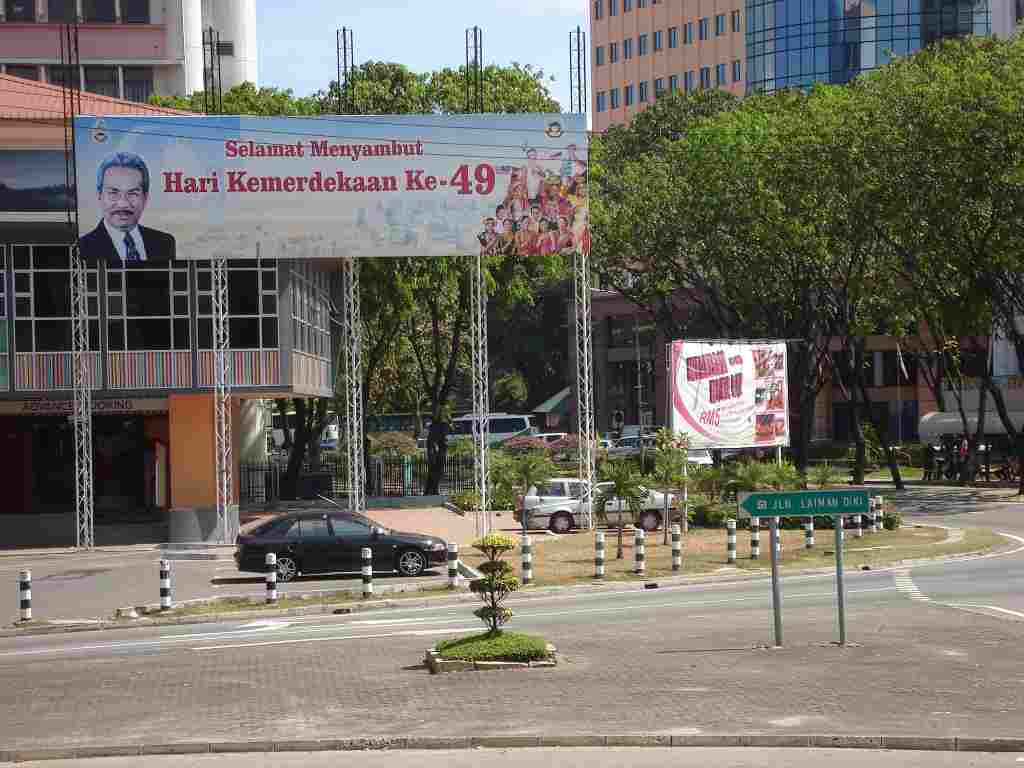
Ini semua gara gara perjanjian Malaysia tidak dipatuhi. Jangan salahkah rasuah. Salahkan nilai penipu dan pembohong. Memang tidak selamat didunia dan akhirat akhirnya.

Real Heros of Sabah

These 6 businessmen are the real heroes of Sabah. I don't count myself as a hero in fact. We are all cowards and don't want to fight for our rights. How should we look at  our leaders who have allowed our riches going out of Sabah so much that Sabah is the poorest in the world, not just in Malaysia. This is unimaginable.
http://www.dailyexpress.com.my/news.cfm?NewsID=82657
Bid to nullify the oil royalty deal
Published on: Wednesday, September 26, 2012
Kota Kinabalu: Six Sabahan businessmen filed a suit at the High Court here, Tuesday, seeking to declare the Petroleum Agreement between the Sabah State Government and Petroliam Nasional Berhad (Petronas) signed on June 14, 1976 ultra vires as well as null and void.
Lahirul Latigu (first plaintiff), Mohd Julpikar Ab Mijan (second plaintiff), Zainal Ajamain (third plaintiff), Joseph Wilfred (fourth plaintiff), Duli @ Dullie Mari @ Marie (fifth plaintiff) and Michael Peter Govind @ Mike Govind (sixth plaintiff) named Petroliam Nasional Berhad as the first defendant and the Sabah State Government as the second defendant.
The businessmen were also seeking a declaration that the Petroleum Development Act, in so far as it applies to the agreement dated June 14, 1976 between the first defendant and the second defendant is ultra vires null and void.
They are claiming for damages to be assessed, cost plus statutory interest and other relief deemed fit by the High Court.
In their statement of claim, the plaintiffs said the agreement was null and void and ultra vires to Article 74 of the Federal Constitution and the Ninth Schedule of the Federal Constitution.
"Furthermore the said agreement on 14th day of June 1976 is unenforceable by reason of the Petroleum Act 1974 being in contravention of Article 13 of the Federal Constitution of Malaysia which states that no law shall provide for compulsory acquisition or the use of property without compensation," they said.
Thirdly, they said the agreement on June 14 June 1976 was executed by the executive arm of the State Government of Sabah without approval and consent of the State Legislative Assembly and is therefore ultra vires null and void.
"Fourthly, the said agreement dated the 14th day of June 1976 is merely a vesting deed and to date there is no agreement or contract between Petronas and the Sabah State Government in regard to the sharing and exploitation of the onshore and offshore resources of petroleum belonging to the state of Sabah. In consequence thereof, the said agreement is ultra vires null and void.
Fifthly, the plaintiffs said the vesting of petroleum resources of Sabah under the said agreement dated 14th day of June 1976 by the Sabah State Government into the hands Petronas by which is neither the executive or legislative part of the Federal Government of Malaysia but merely a company incorporated under the Company's Act 1965 is ultra vires null and void.
The plaintiffs also said Pakatan Rakyat's pledge on oil justice that it would raise to 20 per cent the oil royalty for Sabah and Sarawak once it formed the Federal Government as stated in its recent Kuching Declaration if brought into effect would be unlawful ultra vires null and void against Article 74 of the Federal Constitution and the Ninth Schedule of the Federal Constitution.
Under the Ninth Schedule of the Federal Constitution, the Federal have powers except over permits and licenses under State rights, the Federal Government has rights over development of mineral resources, mines, mining, minerals and mineral ores, oils and oil-fields, petroleum products, safety in mines and oilfields.
The Ninth Schedule also stated the following matters to fall in State hands: "Land: Schedule 9 List II, Para 2(a). Under the interpretation Acts, 1948 and 1967, Section 3, land includes "the surface of the earthÉall substances thereinÉall vegetation and other natural productsÉwhether on or below the surfaceÉand land covered by water".
"The territorial waters of Kelantan will come within the definition of "land covered by water". Territorial waters are defined by section 4(2) of the Emergency (Essential Powers) Ordinance No 7, 1969."
"In addition to the income from land, one notes that in Article 110(3a) there is provision for discretionary payment on such terms and conditions as maybe prescribed by or under federal law of the export duty on "mineral oils" produced in the state. Petroleum comes within the meaning of "mineral oils" under Section 10 of the Petroleum Development Act."
In addition to the right of the states, Sabah and Sarawak enjoy some special sources of revenue, which is stated under Schedule 10, Part IV, Paragraph One that assigned import duty and excise duty on petroleum products to Sabah and Sarawak as well as Schedule 10, Part V, Paragraph Three that assigned royalty and export duty on "mineral oils" totalling 10 per cent to Sabah and Sarawak.
"Petroleum", as defined in the Petroleum Development Act, falls within the meaning of "mineral oils" and, therefore, 10 per cent combined royalty and export duty on it constitutes part of the guaranteed revenue for Sabah and Sarawak, the plaintiffs said.
"Furthermore the said Declaration in so far as petrol justice is concerned is unenforceable by reason of being in contravention of Article 13 (2) of the Federal Constitution of Malaysia which states that no law shall provide for compulsory acquisition or the use of property without compensation.
"The said Declaration fails to recognise that the State of Sabah is entitled to one hundred per cent of the proceeds and income from the extraction of petroleum offshore and onshore of Sabah waters," they said.
The plaintiffs also referred to news reports by local politicians and national leaders that Sabah has the potential of becoming the biggest oil and gas producer not only in Malaysia but in the South East Asia region with potential of producing one million barrels a day.
"The estimated reserves from the present Sabah oilfields is 1.4 billion barrels of oil and 7.7 trillion scf of gas."
Sabah politicians, they said had also been calling for a relook of the 1976 Petroleum Agreement.
The plaintiffs also referred to a media report in November 2011, which reported Petronas discovering substantial oil reserves offshore of Sabah, which is at Wakid-1 well, about 100km northwest of the State Capital.
Meanwhile, Zainal, who was the spokeperson of the plaintiffs, when met by reporters after filing the suit through counsel Marcel Jude, said: "It is illegal for the Federal government to take our oil, all 100 per cent of it belongs to the people of Sabah, the Malaysia Agreement 1963 is very clear on this."
He said they are contending that the 1976 agreement is in conflict with the Federal Constitution which for the last 36 years successive State government failed to address.

Friday, September 21, 2012

Malaysia Agreement was not violated?

This columinist is just a government propagandist. He does not even read a single word of the agreement and just rely on government propaganda to make his comments.

The agreement clearly stipulate that ALL government posts must be held by Sabahans. And the State government must ensure that this is the case. In other words, the State governments of Sabah and Sarawak are also liable if they violate this condition. The state governments of Sabah and Sarawak cannot give away any of the rights enshrined by the Malaysia Agreement, let alone an acting chief minister of Sabah.

If this is not a violation, what is?

As for the immigration act, supposedly upheld by the courts, it was nothign but a show of face. The director of immigration is not a Sabahan, and the law is now tied to a Federal government's wish and fancy, all in violations of the Malaysia Agreement that accords Sabah full control over Immigration, not one that is managed by a Malayan, staffed by Malayans, laws passed by Malayans. By violating this right, both the State government of Sabah and Federal Government of Malaysia have violated this agreement.

The result is very clear for all to see, Sabah has gone to the stone age, among the poorest in the whole world, with 20% poverty rate, much higher than Perlis at 6%. Even Ivory coast of Africa cannot be that much higher but Ivory coast is much more well developed than Sabah, judging from the conditons of its roads and bridges.

http://www.nst.com.my/opinion/columnist/malaysia-agreement-stands-the-test-of-time-1.146409


Email    Print
21 September 2012 | last updated at 12:12AM
Malaysia Agreement stands the test of time
By John Teo | johnteo808@gmail.com 0 comments


SABAH, SARAWAK RIGHTS UPHELD: Calls for review of its 20 provisions premature

John TeoIT must be just happy coincidence that as Prime Minister Datuk Seri Najib Razak was talking about the state-federal partnership during Malaysia Day celebrations in Bintulu, the same theme of partnership was bandied about in Kuching by the opposition.

The prime minister was expounding on partnership as a fact over the last 49 years since the Malaysia Agreement was inked. The Malaysia Agreement was forged on the basis of a federal arrangement whereby the state and federal governments each has a clearly defined set of responsibilities, with certain overlapping responsibilities coming under a concurrent list.

The Agreement was freely entered into by the expanded nation's founding fathers. It has withstood the test of time, despite some clamour by some quarters from time to time for a vaguely defined "review" of points in the Agreement.

Any call for a "review" may suggest some unhappiness over the terms of the Agreement but unless it is clearly spelt out if any dissatisfaction actually arises out of some breach or contravention of the Agreement and any attempts at seeking redress having been tried and found wanting, any "review" is at best premature.

Whatever dissatisfaction there may be over the so-called 20 points of the Malaysia Agreement in the case of Sabah and 18 points in Sarawak's case has not really amounted to any solid basis for a legal challenge over any breach or contravention of the Agreement so far.

In fact, Sarawak has recently just got another reaffirmation of the state's rights when a legal challenge to its barring of a citizen from Peninsular Malaysia from entering the state filed in a court in the peninsula was thrown out for lack of competent jurisdiction by the said court.

Another persistent matter of contention in Sabah and Sarawak has been over the five per cent petroleum royalty that each state receives from Petronas. Again, it must be recalled that the five per cent quantum was something freely and readily agreed to between Sarawak and the Federal Government after extensive negotiations. The Sabah government quickly followed in signing a similar agreement thereafter.

If anyone should find fault with these particular agreements now, any blame must fall at least equally between the Federal Government and either state government unless it can be shown that the state or federal authorities then put pressure to bear on the other party to sign a pre-drafted agreement.

The first recourse for anyone in either state must be to hold the state government to account and justify the basis for signing the agreement. Partnership, after all, must be a two-way street if it is to mean anything at all.

Indeed, the record thus far would suggest that the Federal Government has usually bent over backwards to accommodate the expectations and demands of the people in both Sabah and Sarawak. Najib brought up the concrete examples of how he readily approved the setting up of a university each in Kuching and Miri while education minister and now a university for Sibu has also been approved. All these universities had been state initiatives.

Yet another loaded accusation has been a complaint that the autonomy enjoyed by both Sabah and Sarawak has somehow been eroded over time. General ignorance may be more at fault here, such as when even senior state officials mistakenly assume Islam to be the official religion for the entire country when constitutional provisions excluding Sabah and Sarawak from having any official religion remain in place.

Also, the imperative of national integration will naturally have taken its course after almost half a century of Malaysia. This is largely for the greater good of the nation as a whole. But admittedly there will be some areas where the people in both Sabah and Sarawak quite firmly believe importing certain norms from the peninsula is unhealthy. Increasingly, even people in the peninsula realise as much and are actually advocating importing Sabah and Sarawak norms over to the peninsula.

It is therefore somewhat mystifying that instead of re-affirming and seeking to strengthen the provisions of the Malaysia Agreement, the opposition sees fit to draw up its so-called "Kuching Declaration" committing the opposition parties to some ill-defined "equal partnership" agreement between state and federal governments and promising that it is a legally-binding document that will stand up in court should a future opposition-led Federal Government not live up to its provisions.

Will someone enlighten us as to what precisely may be wrong with the Malaysia Agreement to warrant an "alternative" agreement now and why, if indeed the original Agreement has its shortcomings, nobody bothered to legally test those shortcomings and the few who actually did find fault find that they themselves come up short?

Read more: Malaysia Agreement stands the test of time - Columnist - New Straits Times http://www.nst.com.my/opinion/columnist/malaysia-agreement-stands-the-test-of-time-1.146409#ixzz278bGjmz0

Friday, July 13, 2012

Sabah ‘drowning’ in political cesspit

http://www.freemalaysiatoday.com/category/opinion/2012/07/13/sabah-drowning-in-political-cesspit/Sabah ‘drowning’ in political cesspit

July 13, 2012
According to the facts laid out in the Ninth Malaysia Plan, there is no reason left for Sabahans to return Barisan Nasional to power.
COMMENT
By Joseph Wilfred Lakai
I dare say that Sabah is the worst managed state in Malaysia and the worst place to live in. Why? Because it has the second lowest water supply coverage, the highest population growth, the largest number of illegal immigrants, the highest incidence of poverty, the poorest electricity/energy efficiency and is the least developed state in Malaysia.
My conclusions are not unsubstantiated. They were drawn from a close study and analysis of the Ninth Malaysia Plan.
Below is what we culled from the Ninth Malaysia Plan:
  • Sabah has the second lowest water supply coverage of 75% throughout the state, just ahead of the 70% water supply coverage in Kelantan.
  • Sabah has the highest population growth rate in the country at 3.1% as compared with the national average of 2.3%. Its population jumped by 530,000 or more than 20% in the space of five years from 2.6 million in 2000 to 3.13 million in 2005.
  • Sabah has the largest number of illegal immigrants and those with genuine ICs under “Project M” are estimated at nearly one million. In 1960, the Kadazandusun population was 168,000 and equalled the number of other Bumiputeras. In 2000, while the Kadazandusun Murut population increased to 560,000, the population of other Bumiputeras had grown to 1.1 million.
  • Sabah has the worst energy efficiency with shocking system losses of 19.5% – units sold per employee (Gwh) is only 1.29 and System Average Interruption Duration Index (SAIDI) is 4,109 minutes per customer per year. In other words, 4,109 minutes are lost from power interruptions in Sabah each year or almost three days out of 365 days. No wonder Sabah is known as the “Land With Power Cuts”. This compares unfavourably with Tenaga Nasional Bhd’s system losses of 10.5%, 3.05 Gwh units sold and 147 SAIDI or only 147 minutes lost per year in Peninsular Malaysia.
  • Sabah has the worst incidence of poverty at 23% in 2004 as compared with Sarawak’s 7.5% and Kelantan’s 10.6%. The incidence of poverty in Peninsular Malaysia is 3.6% and for the entire country 5.7%.
  • Sabah ranked last on the Development Composite Index (DCI) scoring 90 as compared with the highest of 109.6 of Federal Territory of Kuala Lumpur. Even Kelantan is ahead of Sabah with a DCI of 93.1.
‘Sabahans have nothing more to lose’
Clearly being the least developed state in Malaysia is the reward given to Sabahans for giving absolute power to Barisan Nasional without any meaningful opposition in the state.
Absolute power corrupts absolutely – and Sabah today can attest to this.
The time has come for Sabahans to wake up and restore democracy by voting in a strong and effective opposition.
We need to fight for political equality, socio-economic justice and for clean and good governance.
Sabahans have nothing more to lose; we are already the bottom state in Malaysia.
With such abundant natural resources, it is unacceptable for Sabahans to live in poverty, where there are frequent interruptions in power supply, poor roads and frequent water supply breakdowns.
It is unacceptable that Sabahans must live like strangers in their own lands facing illegal immigrants and also there is a deepening divide between the rich and poor.
In 2004 Sabah had a mean monthly income of RM2,487.
But how many households have a mean monthly income of RM2,487 when Sabah has the highest poverty incidence of 23%?
Malaysia has the worst income disparity in Southeast Asia between the rich and poor, with the share of income of the bottom 40% of the population enjoying only 13.5%, while the share of the top 20% increased 51.2%.
The income disparity is clearly much worse in Sabah where the rich have become richer while the poor remain poor.
Petronas earned RM500 billion todate
Malaysia has much wealth. The only problem is that it is not shared equitably with other Malaysians.
As an oil exporter, Malaysians have not received a single sen of oil revenues even though Petronas earned RM500 billion since it was established 31 years ago in 1974.
If this RM500 billion was shared with every needy Malaysian who is not wealthy, each Malaysian, young and old, can get at least RM20,000 each.
But Malaysians have not received a single sen of oil revenues due to extensive corruption by the BN government.
Former Prime Minister Dr Mahathir Mohamad recently revealed that Petronas was expected to earn RM83 billion for last year.
After deducting tax and royalties of RM40 billion, fuel subsidies of RM13 billion, Petronas will still have RM40 billion left.
If this was distributed to needy Malaysians, each young and old would get RM2,000 each per year.
A five-member household would then receive RM10,000 per year. They would not fear petrol and electricity price hikes and this would ill further assist them in reducing their financial burdens.
But why have we not received a single sen when this is our birthright as oil revenue from our oil resources belongs not to one company or to any individual but to all Malaysians?
Explain this, Najib
Let’s look at Singapore. The island republic is not an oil exporter.
If a non-oil exporter like Singapore can give S$2.6 billion (RM6 billion) cash under its 2006 Budget to all Singaporeans, especially the poor, why can’t the Malaysian government do so when Petronas has earned nearly RM500 billion since its inception in 1971?
Oil importer Singapore has given S$10.675 billion (RM24 billion) directly to its people since 2000 as compared to Petronas which has not given a single sen.
The question that Prime Minister Najib Tun Razak must answer is: how is it that Malaysians cannot get a single sen directly from the RM500 billion oil revenue while Singaporeans without earning a single sen from oil revenue can benefit from RM24 billion these last five years?
Clearly, it is important that Malaysians seek accountability and economic justice not only from the Sabah BN government but also from Najib to prevent all our oil revenue from being misused by the select few.
The writer is the vice-chairman of Sabah Progressive People’s Party

Read more: http://www.freemalaysiatoday.com/category/opinion/2012/07/13/sabah-drowning-in-political-cesspit/#ixzz20Y5EOWaA

Thursday, July 5, 2012

Ranau appears poorer than Batak Region in 1985

Batak is known as amongst the poorest in Indonesia and yet when I went there in 1985, it was not so bad. Their houses are well built compared to the houses in Mersilau, Ranau, also a mountainous region, similar to Batak. Masidi's village is just next to the Ranau town so it appears well off, but the incidence of poverty need not be widespread. It only needs to be about 20% before we can be among the poorest in the world. 20% means 1 in 5 of us are poor, and poor means that you earn an income of less than RM1000 per month in Sabah. This standard of poverty is set by the UN and the statistics are compared with all regions in the world. It appears that not many places have such high incidence of poverty as Sabah.


 http://www.freemalaysiatoday.com/category/nation/2012/07/05/poverty-in-ranau-whos-lying/

Poverty in Ranau: Who’s lying?

Luke Rintod | July 5, 2012
An Upko MP's concern about the high incidences of abject poverty in Sabah's Ranau district is in contrast to an Umno assemblyman's public denial.
RANAU: Barisan Nasional representatives are at odds over the status of Ranau district in central Sabah which hosts multiple cases of extreme poverty. Ranau is also surrounded by areas that are poverty-stricken, an anomaly by itself in a state blessed with bountiful oil and gas.
Ranau MP Siringan Gubat, a member of BN component, Upko, recently told Parliament that the incidence of poverty in Ranau was ‘worrying’.
But much earlier in April, Keranaan assemblyman, Masidi Manjun of Umno denied this, saying Ranau cannot be the poorest district as development was taking place there.
In the same statement Masidi accused the opposition of giving a negative picture of Ranau and the development taking place there. He was responding to the opposition State Reform Party’s (STAR) claims that the district could well be the poorest area in Sabah.
Yesterday STAR Ranau chief, Jalibin Paidi, in another salvo at ruling BN, said he was vindicated by Siringan’s recent admission that that he (Siringan) was ‘worried’ by the high incidence of poverty in Ranau.
“When I made the statement in April this year that Ranau could well be the poorest district in Sabah, Masidi, who is also Sabah Minister of Tourism, Culture and Environment, denied it bluntly, saying there was no truth to it.
“But the very recent remarks by Siringan in Parliament as carried by local newspapers days ago vindicated me on my contention,” said the former teacher who seems poised to take on either Masidi or Siringan in the coming general election.
“It must be God’s way of telling the ruling party that Ranau indeed is in poverty and in need of help. And that is a fact actually, when you go to the ground around Ranau town and in remoter kampungs, a fact some ruling leaders like Masidi prefer to deny and therefore do nothing, because in their view, there is no poverty (to tackle).
“When Siringan told Paliament that the high incidence of poverty in Ranau was worrying, I guess Masidi was gritting his teeth as Siringan confirmed our earlier contention that Ranau could be the poorest district.
“I wonder what Masidi would say now that his own colleague had realised in his own findings about poverty in Ranau,” said Jalibin, adding that Masidi must be reminded that Ranau has three vast state constituencies, Keranaan, Paginatan and Kundasang.
“If Siringan’s remark is of any credence, as he is the MP for Ranau overseeing all three constituencies, then Masidi is too detached from Kundasang and Paginatan if not his own Keranaan to know the truth,” he argued.
‘No impact’ development
In April, Jalibin had contended that Ranau which is surrounded by the rural-most parts of several poverty stricken districts such as Kota Marudu, Beluran, Tongod, Tambunan, Keningau, Kota Belud and Tuaran districts, could be the poorest in Sabah.
“STAR is concerned because many areas in Ranau still do not enjoy basic amenities such as sealed roads, electricity and water.
“It is also a very hilly district and it is common to see natives living in poverty in old dilapidated wooden houses here and there,” he said.
Jalibin also pointed out that signs of poverty could be seen from the low purchasing power of the people in Ranau.
He said though it has three state constituencies, only the two towns of Ranau and Kundasang were thriving partly because they are right on the east-west road connecting Kota Kinabalu to Sandakan and Tawau.
Jalibin also criticised the multi-million ringgit tourism and property development in Ranau for having little impact on the lives of ordinary kampung folks.
“There are no programmes for the meaningful participation of local entrepreneurs. It’s the same in the agriculture sector too,” he said.
‘No socio-economic data on Ranau’
The former teacher also pointed out the scarcity of reliable statistics or data on the socio-economic status of those living in and around Ranau.
“Now that Siringan admits rampant poverty, please enlighten us on our situation and how the government is tackling our problems.
“If the BN is still in denial then that speaks volumes why its leaders do not do something meaningful to alleviate the poverty problem in Ranau and elsewhere,” Jalibin added.
Ranau, a highland area in Sabah with an average elevation of about 1,176 metre above sea level has a population of 94,092 according to the 2010 census.
It’s main tourist destination is Mount Kinabalu and the Kinabalu Park but is also famed for the hot springs in Poring, the WWII memorial at Kundasang and the WWII Death March Trail.
It is also home to the country’s first World Heritage Site. Kinabalu Park was accorded the title by Unesco in December 2000.
On a more sombre side, the district also once hosted the largest mining project in Malaysia, the Mamut Copper Mine, before it ceased operations in 1999. The site is now an environmental nightmare.

Tuesday, June 19, 2012

Oil revenue given in cash in return for loans for developments in Sabah

 http://www.freemalaysiatoday.com/category/nation/2012/06/19/clean-water-dirty-loan/


Clean water, dirty loan

Luke Rintod | June 19, 2012
The RM235 million loan to the Sabah government for a water treatment plant in Keningau, may backfire on Prime Minister Najib Tun Razak.
KENINGAU: Prime Minister Najib Tun Razak’s sudden announcement of a RM235 million loan from the federal government to Sabah to upgrade water supply for Keningau alone has caught many here by surprise.
Most people here were sceptical of Najib’s announcement during his trip here last weekend.
One economist from Kuala Pemyu, Dr James Alin, questioned the motive behind the abrupt decision to grant Sabah a loan and not a federal grant, as was the normal procedure.
“The question that most Sabahans must ask is, why is the federal government lending us an umbrella when it is not raining? What is the ulterior motive?”
“The plight of the voters in Keningau on water supply has been ignored all this while and the loan shows that the federal government has been unfair to the people of Sabah all the time,” said Alin, whose own hometown in Kuala Penyu lacks water supply.
Another who shared Alin’s concern was State Reform Party (STAR) deputy chairman Daniel John Jambun,who described the “sudden aproval” as “insulting” to Sabahans as a whole and those in all other districts that also lack water supply.
“Sabah contributes around RM40 billion in taxes and oil wealth to the federal government every year for the last few years and Najib came here to announce a loan to upgrade an essential basic necessity like water?
“Why didn’t he just make an allocation for it in the coming federal budget? This is outrageous and an insult,” Jambun said.
He accused state leaders who hailed the announcement as “hypocrites” who knew that it was Sabah’s money that Najib is “lending us”.
Sabah Progressive Party (SAPP) vice-president, Melanie Chia, also expressed her dismay over Najib’s bragging.
Why are were borrowing?
Chia said it was humiliating to read that Najib had only announced the loan because Keningau MP, who is also the Deputy Chief Minister, Joseph Pairin Kitingan, had over the past months been bugging him about the water problem in Keningau.
The loan comes two years after the State Legislative Assembly was told in 2010 that a major water supply project had been approved under the Ninth Malaysia Plan.
The feasibility study costing RM10 million would be completed by May 2010 and the project would take 24 months to be completed at a total cost of RM210 million.
“It was shocking to note that Pairin had not discharged his duty well. Has it not been repeatedly announced by BN government leaders that this government under the leadership of Chief Minister Musa Aman is financially very sound, with some of them [including Pairin] saying it is ‘the best ever’?
“If the Sabah’s financial position is indeed that sound and glorious, why does Sabah need to be given a loan to do basic infrastructure like water supply?” she asked.

Tuesday, February 14, 2012

14% Sabahans satisfied with 10% Budget?


These BN supporters are happy that Sabah, with a population of 14% of Malaysia be given only 10% of the Malaysian budget. No wonder Sabah is the poorest in the world, not only in Malaysia. Especially when Sabah makes of 23% of the area of Malaysia.


With such stupid mentality, they are even certain that Anwar will giver much lower than 10%, overall budget, when oil revenue were RETURNED TO SABAH.

Anwar will certainly lose power immediately if he were that stupid. The worst that can happen is that SABAH will get the same stupidly low budget allocation, that most Sabahans are already satisfied with. The difference is that the State Government of Sabah is much richer this time. The money can also be spent in Sabah with 100% certainty, increasing Sabah's overall economic activities in Sabah.

With such blatantly stupid BN representatives, no wonder Sabah is the poorest in the world.


http://www.theborneopost.com/2012/02/14/sabah-will-be-worse-off-if-federal-governments-allocation-reduced-says-state-bn-secretary/


Sabah will be worse off if federal government’s allocation reduced, says State BN secretary

by Nancy Lai. Posted on February 14, 2012, Tuesday
KOTA KINABALU: Will the increase in Sabah’s oil royalty mean reduced federal allocation for development in the state?
And can the opposition, including Pakatan Rakyat leader Datuk Seri Anwar Ibrahim, should they form the next government, guarantee that federal allocation to Sabah will not be reduced in lieu of the increased revenue derived from the new oil royalty?
These were the questions raised by Sabah Barisan Nasional secretary Datuk Abdul Rahman Dahlan who is worried that Sabah will be ‘worse off’ than before should the federal government’s allocation under the Malaysia Plans be reduced.
It is very likely that Sabah may be getting higher oil royalty but in the end will get lower overall funds from Federal Government under his (Anwar’s) prime ministership, Abdul Rahman opinied.
Speaking to reporters here yesterday, the Kota Belud member of parliament said Anwar had been quoted repeatedly saying that (if Pakatan Rakyat forms the government) he would increase Sabah’s oil royalty from five per cent to 20 per cent.
Other opposition leaders like Datuk Dr Jeffrey Kitingan went even further by promising 50 per cent, Abdul Rahman said adding, “As an MP for Sabah, I do not have any reason to reject such wonderful proposal. More money for Sabah is obviously good for us.
“But I am also painfully aware that Anwar has not been fully forthcoming in his proposal. In Parliament I posed a question that if Anwar increased Sabah’s royalty to 20 per cent, could he guarantee that he would not reduce Sabah’s allocation in his federal budget or in the Eleventh Malaysia Plan?
“I reminded the opposition that Sabah had been consistently given biggest allocations by the federal government both in the Malaysia Plans and the federal government’s annual budget. For example Sabah received RM20.3 billion out of RM230 billion and in First Rolling Plan of the 10th Malaysia Plan, Sabah received RM10.7 billion out of RM98.5 billion.
“My concern is, while Datuk Seri Anwar may increase Sabah’s share of the royalty, he will have to reduce Sabah allocation in the 11th Malaysia Plan. We may end up worse off! That is why I asked for a guarantee. None of the opposition MPs at that time stood up to reply to argument,” he said.
According to Abdul Rahman, increases in royalty for Sabah, Sarawak, Terengganu and Kelantan would amount to more than RM10 billion a year.
Anwar knows very well that the RM10 billion given to the three oil producing states mean RM10 billion taken away from the budget of the other states in Peninsular Malaysia, he pointed out before saying, “I do not think Datuk Seri Anwar dare to say to the people from the non-oil producing states, ‘I am sorry, I have to cut your allocation because I need to give RM10 billion to Terengganu, Kelantan, Sarawak and Sabah!.
He (Anwar) cannot afford to say that because the people in these affected states will reject him and this is unacceptable to him since he needs their votes desperately to win Putrajaya, Abdul Rahman stressed.
“I want to know which state(s) is willing to have their budget reduced because the RM10 billion has to come from somewhere… money does not fall from the sky. Show us which sector he plans to reduce the budget to make up for the increase in oil royalty… which state will sacrifice its allocation?
“Anwar as a leader must answer this. How is he going to juggle the budget and he must inform the rakyat, Sabahans in particular on how this will be done because it is very likely that Sabah may be getting higher oil royalty but in the end will get lower overall funds from Federal Government under his prime ministership.
“For every ringgit given to Sabah, Sarawak, Terengganu and Kelantan, that one ringgit must come from somebody. This can only mean that some states must be willing to sacrifice their portion of the federal budget.
“Some projects in Peninsular Malaysia must be cancelled. Question is who and what needs to be sacrificed? Or will Datuk Seri Anwar spend less on security, health, education, infrastructure, public utilities, social etc given the fact he has to spend more on royalty?” he stressed.
Anwar must answer these tough questions so that people understand and are convinced, he said adding, “and mind you, Sabahans still remember how Anwar as Finance Minister and Deputy Prime Minister consistently refused PBS’ request for higher royalty.
According to Abdul Rahman, he will again raise these questions in the next parliamentary sitting which is scheduled to commence on March 12.
He also pointed out that Pakatan Rakyat said they would eradicate corruption and renegotiate lopsided deals which would give the federal government billions in extra funds for the increase in royalty.
As someone who sits in the Malaysian Anti-Corruption Committee (MACC) committee, Abdul Rahman said he hoped they would succeed.
“Any effort to abolish corruption must be supported and encouraged. I am sure Sabahans share the same view as mine. My concern is not about the effort to check corruption. It is more about Anwar’s rationale of including ‘savings from corruption eradication efforts and renegotiating lopsided deals’ as part of his government’s revenue.
“Can Anwar estimate how much yearly savings he gets from anti-corruption effort? Can he comfortably project such revenue with a high level of accuracy and use the figure to plan his budget?
“Can Anwar force those IPPs (independent power producers) and highway toll concessionaires to renegotiate the agreements immediately after he swears in as Prime Minister? Or will he face prolonged and protracted battle with the concessionaires?
“If yes, will his budget revenue projections fall short and hence disturb his spending plans?,” he said and pointed out that no government in this world is using projected savings from corruption as the basis of preparing its budget.
“That is utterly irresponsible. The budget will be in a mess. Any savings in anti-corruption drive is a bonus, not to be included in the budgeting. When Anwar says he will finance the royalty increase from corruption eradication savings, one has to be worried.
“My take is he will eventually have to cut allocations to the other states and those states deserve to know the facts. Anwar must give assurance and guarantee that he will not reduce federal allocation for Sabah if the oil royalty is increased.


Read more: http://www.theborneopost.com/2012/02/14/sabah-will-be-worse-off-if-federal-governments-allocation-reduced-says-state-bn-secretary/#ixzz1mNU9bZc5

Introduction

This blogspot is filled with Adsense links. These google advertising links can be useful but their uses are strictly governed. I earn cash if any of you click these links but if I or my close acquaintances click them, google is very harsh in permanently banning me. Please do not click these adverts unnecessarily.

Learn how to earn money by clicking the button below: